
Tools to address misinformation in other languages: 简体中文 | 繁體中文 | Français | ਪੰਜਾਬੀ | हिंदी | فارسی | عربى | 한국어 | 日本語 | Español | Русский | Tiếng Việt
Overview
-

When misinformation spreads faster than truth, rights get trampled.
Misinformation fuels discrimination and hate crimes. By promoting stereotypes, biases and conspiracy theories that target specific groups, misinformation provokes harmful attitudes and behaviours, including discrimination and hate crimes.
It harms democracy and a functioning society. Mis- and disinformation mislead voters and reduce trust in political leaders. They also increase the amount of “information” available and makes it difficult to identify what is really true. This can make us distrustful of all information—including the information that we need to make informed choices to protect ourselves and those we care about.
To learn more about how mis- and disinformation fuel discrimination and hate and harm democracy, check out our 2023 report, From Hate to Hope (particularly pages 171-172), and our 2024 report, Rights in Focus (particularly pages 55-56).
-
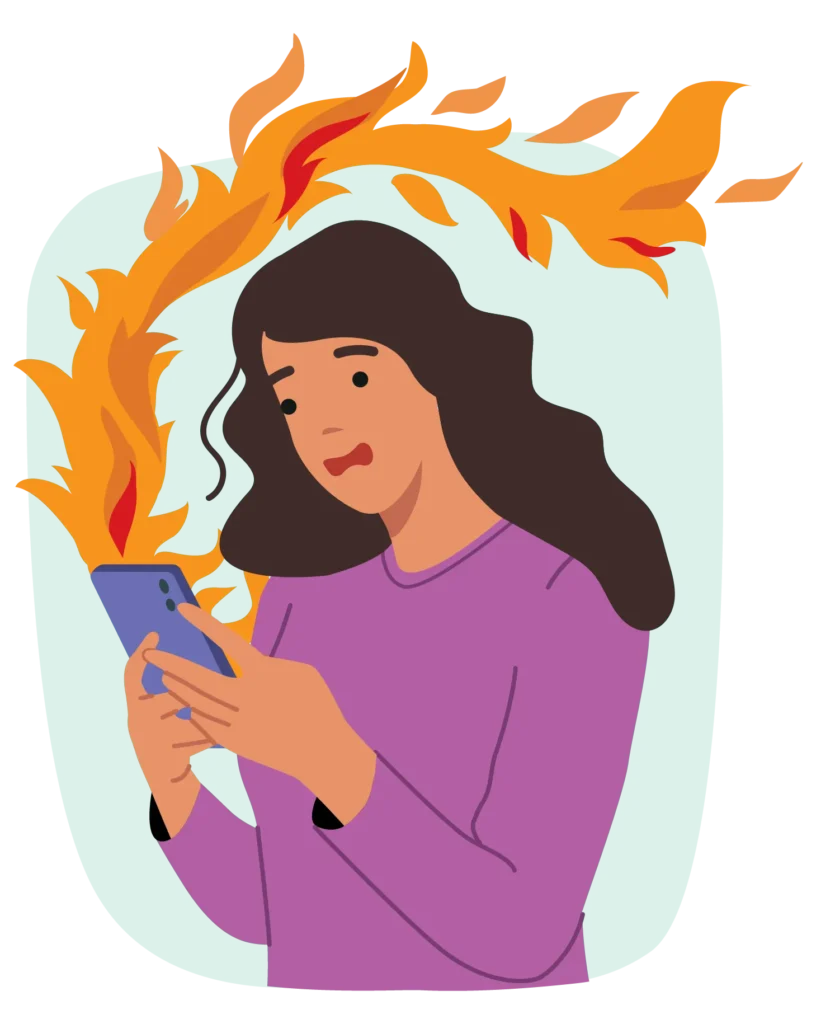
People who create disinformation are motivated to make it work because they benefit from convincing us that the information they share is true. They use powerful strategies to mislead us, including:
-
- using algorithms to show up on social media feeds of people with related interests and values
-
- benefiting from social media site processes (algorithms)
-
- modifying information and creating misinformation that looks real
-
- provoking strong emotions that make it feel urgent to share the post
-
- misidentifying something as the source of a real problem because it occurs as the same time
-
-
You have the power to address misinformation.
You don’t have to confront every manipulative piece of information. But even small actions can have powerful outcomes.
This isn’t just about protecting yourself. When you stop the spread of misinformation, you help to protect:
-
- your friends and family from manipulation
-
- marginalized communities from discrimination and hate
-
- our society from threats to democracy
-
Use the toolkit for addressing misinformation
The misinformation toolkit includes:
-
Learn to STOP misinformation before it spreads. To help STOP misinformation from spreading, you need to be able to recognize misinformation. The STOP method is designed to help you.

Share (only) when you’re sure
Is this really true?Track down the truth
Do other reliable sources have the same information?Outsmart the outrage
Have strong feelings about this? Are those feelings based on facts?Poke at the point of view
What’s it trying to say? Who’s saying it? Who benefits from it being said? -
Test your ability to STOP misinformation before it spreads!
-
The Misinformation: All Birds are Criminals video explores how difficult it is to know if the information you are seeing and sharing is reliable. Using a fake crime spree committed by birds, the video offers a playful perspective on misinformation while speaking to the significant impact that mis and disinformation can have on our human rights. The video shows instances where misinformation can feel real, how it can play on our emotions and how it can divide people. It also offers viewers strategies to help prevent the spread of mis and disinformation.
-
This series of educational videos offer a closer look at mis- and disinformation. They explore what misinformation is, how it works, the connection to human rights and how we can address misinformation.
Mini bite 1: What is misinformation and why does it matter?
Mini bite 2: How does misinformation work?
Mini bite 3: Why is misinformation a human rights issue?
Mini bite 4: We can all STOP the spread of misinformation
Mini bite 5: Examples of actions to STOP the spread of misinformation
-
We called on classrooms, youth groups and community organizations around B.C. to spread the word about how to STOP misinformation before it spreads. Funding was provided to support 50 projects in communities across the province.
Here are six projects to inspire you to create a project to address misinformation in your community.
1. Transform the words
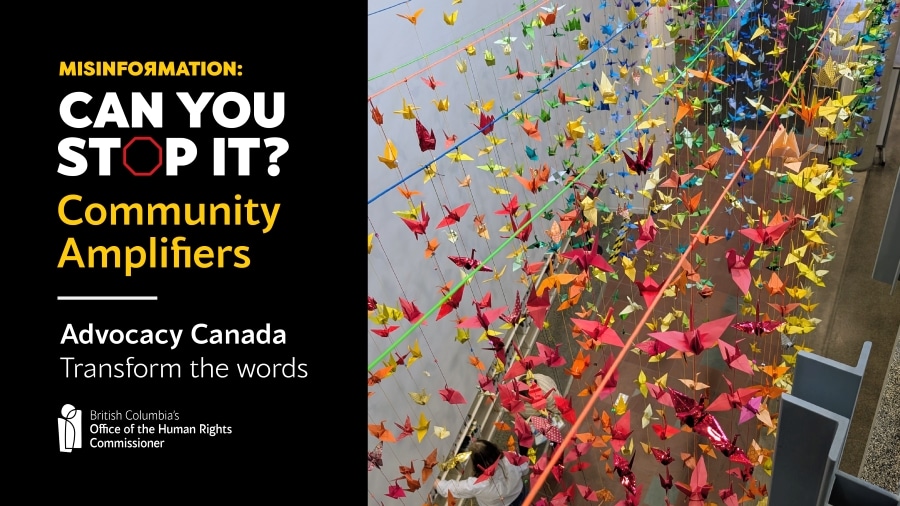
Advocacy Canada created Transform the Words, an art installation that consisted of hundreds of colourful origami cranes. Each crane included statements about sexual orientation and gender identity and invited dialogue to dispel misinformation on this subject.

2. STOP Misinformation
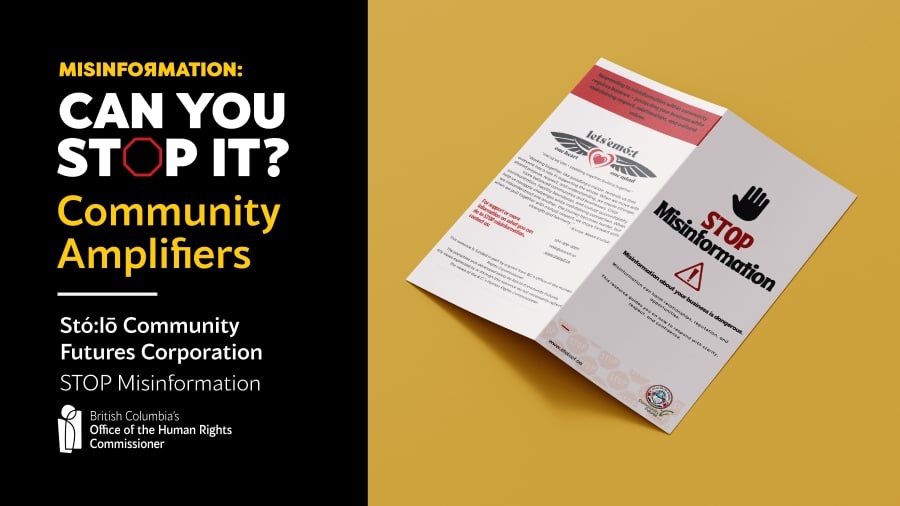
The Stó:lō Community Futures Corporation created pamphlets that support Indigenous-owned businesses address misinformation in their community.
3. Misinformation vs. Disinformation
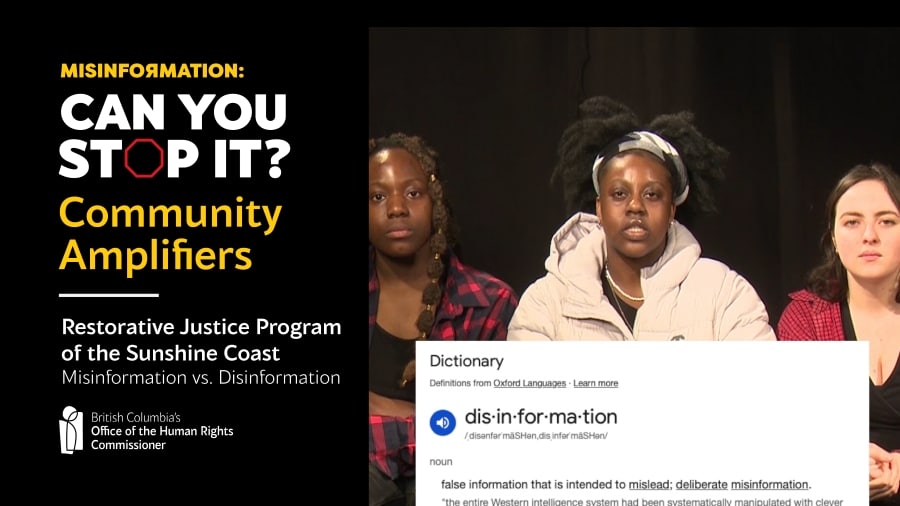
The Restorative Justice Program of the Sunshine Coast created a youth-led video that discusses misinformation and disinformation, the difference between them and how it impacts communities.
4. Shining Brighter Podcast
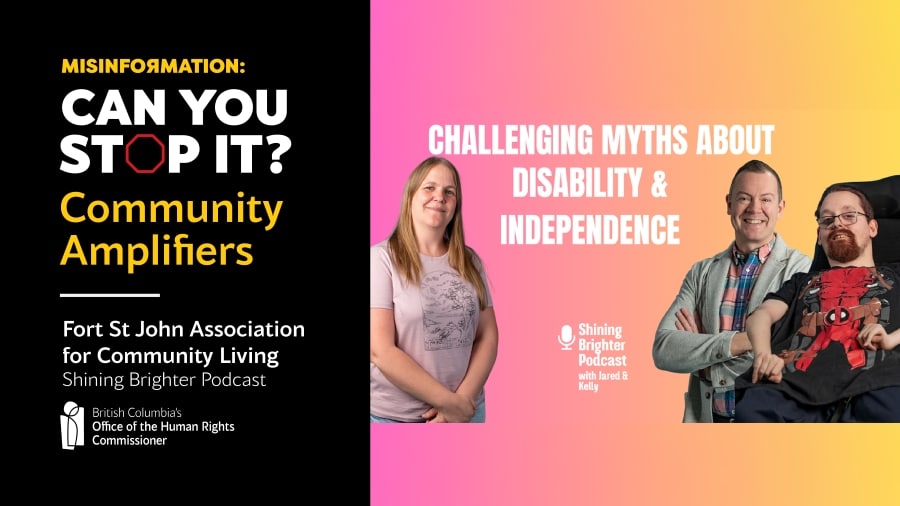
The Fort St John Association for Community Living created a Myths & Misinformation mini-series for their podcast podcast, Shining Brighter, that explores misconceptions about people with developmental disabilities.
5. Your Context, Your Choice
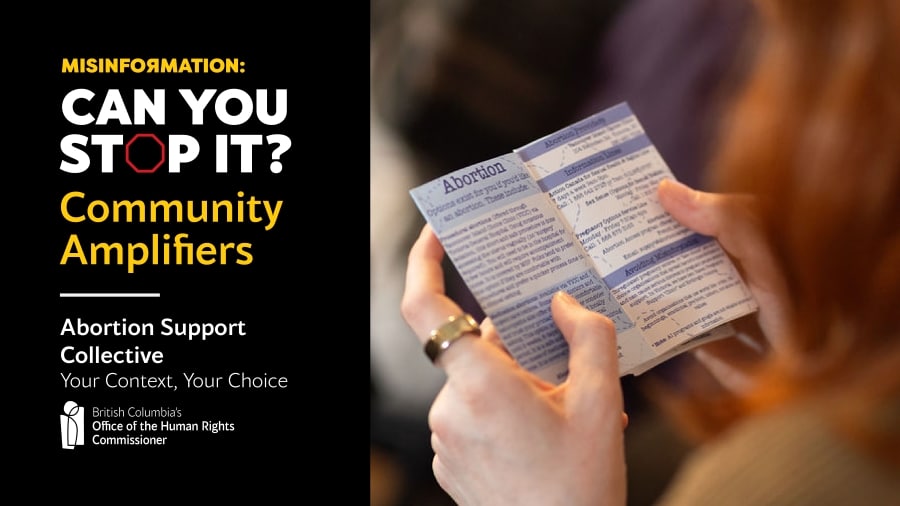
The Abortion Support Collective created a zine, Your Context, Your Choice, that helps people navigate pregnancy choices while addressing misinformation.
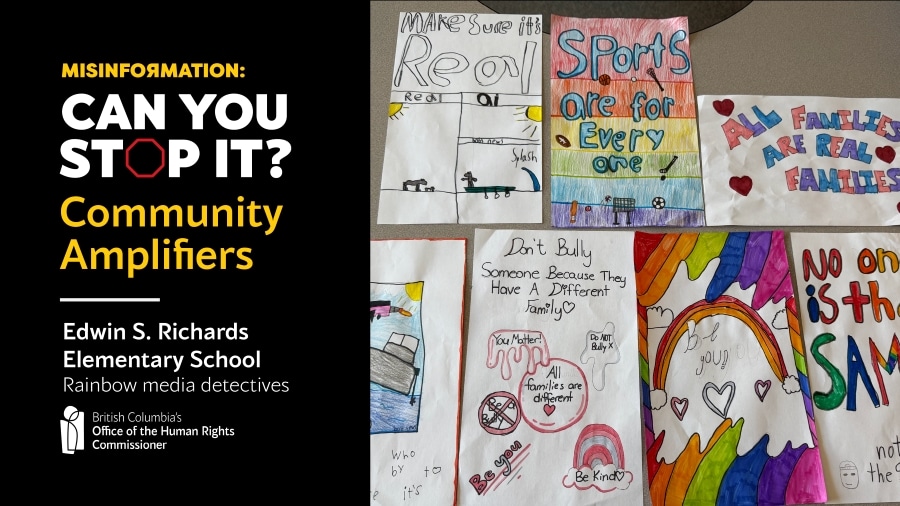
6. Rainbow media detectives
The Grade 4 to 6 classes at Edwin S. Richard Elementary School in Mission created presentations on media stereotypes and misinformation for their school.
The Community Amplifiers’ projects are developed solely by the Amplifiers. Any views expressed by or through their projects do not necessarily reflect the views of B.C.’s Human Rights Commissioner. We are incredibly grateful to all of the Community Amplifiers for the important work that they are doing to address misinformation in their communities.
-




Try our misinformation quiz:
Help others in your life learn about misinformation
Share this webpage, the quiz and the STOP tool with your family members, friends, colleagues and members of your community.
You are the difference
Even if you didn’t think of yourself as someone affected by misinformation…
Even if you’ve shared something that turned out to be false (many of us have)…
Even if it feels overwhelming to push back…
You are part of a bigger story.
When we take action to stop the spread of mis- and disinformation, we push back against manipulation and protect each other’s rights.