


Beyond the headlines on political loneliness with Ece Temelkuran
On October 23, 2026, Commissioner Kasari Govender will sit down with acclaimed author and journalist Ece Temelkuran, whose book, Nation of Strangers: Rebuilding Home in the 21st Century, was the July 2026 selection for the Commissioner’s Book Club. The Commissioner and Ms. Temelkuran will discuss some of the book’s themes, including how people come to feel politically alienated, morally estranged, economically excluded or no longer able to recognize the countries and systems around them. They will also talk about rebuilding a sense of connection and finding a new kind of “home.”
This special event is hosted in partnership with the Vancouver Writers Fest, and is free to attend in person in Vancouver or to watch via livestream.
[Livestream will appear here at the event time]
About Ece Temelkuran

Ece Temelkuran is an award-winning Turkish writer, political thinker, and public speaker whose work has been published worldwide. Her novels have been published in several languages and adapted to the stage. After she left her country in 2016, Temelkuran began writing in English. Her first book in this language, How to Lose a Country, received international praise.
About Beyond the Headlines
How can we address the most important issues facing British Columbians while keeping human rights in focus? What do B.C. residents need to know for themselves, their families, their neighbours and their communities? To help answer these questions, B.C.’s Human Rights Commissioner is hosting a series of conversations with leading experts from across the country.
Each Beyond the Headlines conversation will focus on a key human rights issue facing the province right now. The topics are drawn from the Commissioner’s 2024 Rights in Focus: Lived Realities in B.C. report, which provides a snapshot of inequities in 10 systems, including housing, health care and child welfare.
Over the course of the Beyond the Headlines conversations, the Commissioner and her guests will discuss questions about these systems that are top of mind for British Columbians.
Past conversations
Press freedom and democracy with Irene Khan

Following the release of her report of the Inquiry into Media Exclusion Zones, called Un(media)ted, the Commissioner sat down with Irene Khan, United Nations (UN) Special Rapporteur on freedom of expression and opinion on June 2, 2026 for a conversation on the role of press freedom, freedom of expression and our right to access information as it relates to our democracy and human rights in British Columbia.
The toxic drug crisis with Lisa Lapointe and Jonny Morris


On Dec. 10, 2025, Commissioner Govender sat down with Jonny Morris, CEO of the Canadian Mental Health Association, BC Division, and Lisa Lapointe, B.C.’s former Chief Coroner, to discuss one of the most pressing issues in B.C.: the ongoing toxic drug crisis.
The toxic drug crisis is not only a public health emergency, but also a human rights crisis impacting many of B.C.’s most vulnerable people. This is described in the Commissioner’s position statement on the toxic drug crisis, in which she calls for an evidence-based response that centres public health and compassion for those impacted.
This episode addresses misinformation about the crisis, the stigmatization and marginalization of drug users, the effectiveness of community-led responses and what it means to take a human rights-based approach.
This event also featured a screening of BCOHRC’s I Love My Human Rights video featuring Guy Felicella, a former drug user, who shares his personal journey through addiction and recovery and shows what is possible when we take a human rights-based approach to substance use.
Gender identity and expression with Jessica Love and Georgia Franklin


On Monday, Jul. 14, 2025, Commissioner Govender spoke with Jessica Love, author and illustrator of the acclaimed children’s book Julián is a Mermaid, and Georgia Franklin, provincial coordinator of the BC Summer Reading Club, about how we discuss gender identity and expression with young people in age-appropriate ways—and how we can help them take pride in their identities and celebrate those of others.
Youth who identify as lesbian, gay, bisexual, trans, queer, asexual, intersex, Two-Spirit or otherwise have a right to thrive and to have their human dignity recognized, represented and respected, as we all do. As many communities enjoyed Pride season across B.C., we reflected on how celebrating gender identity and expression—highlighting the joy of being one’s full self—is a powerful antidote to the hate and erasure too often faced by LGBTQ2SAI+ people, including youth.
Jessica Love gave a reading of Julián is a Mermaid, a story that provides readers of all ages insight into the transformative power of being seen for who we are, accepted and loved. Julián is a Mermaid was the March 2025 Commissioner’s Book Club pick for preschool-aged children.
Migrant workers’ rights with Ketty Nivyabandi
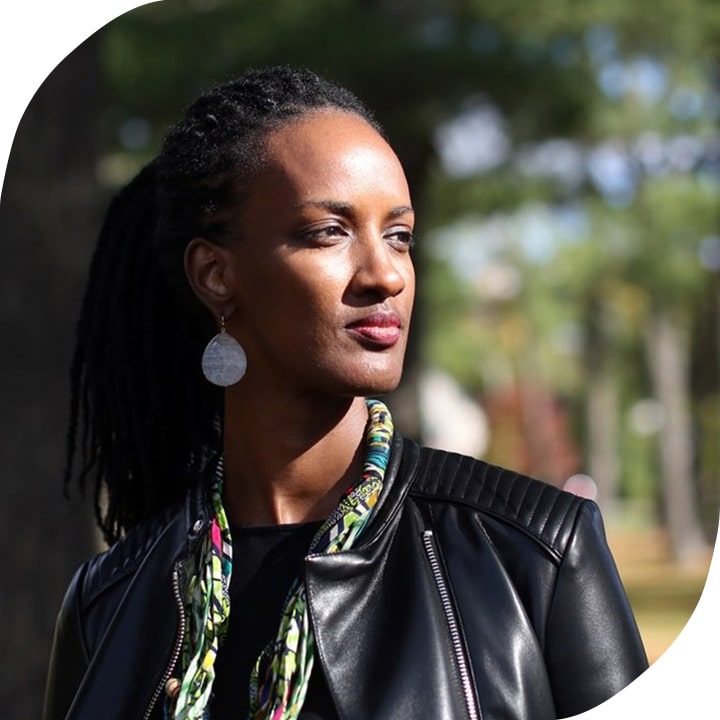
On May 15, 2025, Commissioner Govender sat down with Ketty Nivyabandi, Secretary General for Amnesty International Canada’s English-Speaking section, for a conversation about how structural factors can create vulnerabilities for the exploitation of migrant workers.
As described in the Commissioner’s Rights in Focus report, migrant workers, and specifically temporary foreign workers, are at risk of exploitation due to their immigration status being tied to their employment. Migrant workers are also at a greater risk during large-scale climate emergencies and have reported being excluded from responses during these emergencies. Following closely on International Workers’ Day (May Day), this Beyond the Headlines discussion provided insight into the rights of migrant workers and how we track progress on this issue in British Columbia.
Housing with Marie-Josée Houle, Federal Housing Advocate

On Nov. 28, 2024, Commissioner Govender sat down with Federal Housing Advocate Marie-Josée Houle for a candid conversation about navigating the housing crisis while keeping human rights in focus.
As described in the Commissioner’s Rights in Focus report, the housing crisis has exposed vulnerable people to increased risk of violence and exploitation—and has pushed thousands of people in B.C. into homelessness. Coming on the heels of National Housing Day, this Beyond the Headlines discussion provided a space to better understand how to navigate the housing crisis through a rights-based lens.